Study from your own material
Paste notes, upload a PDF, fetch a webpage, or photograph up to 100 pages of coursework. Herschel reads it first and builds the course from what you bring.
Private beta
Tell Herschel what you want to learn. Choose the questions you want answered and the skills you want to build. Herschel plans a course around them, writes each lesson, answers your questions as you read, and gives you practice to check you got there.
Individual invitations · Adults 18+
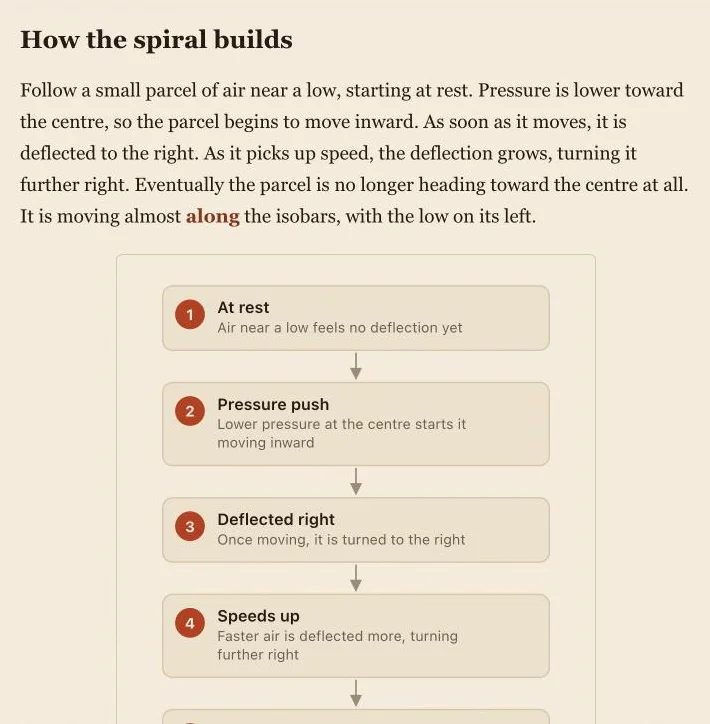
How it works
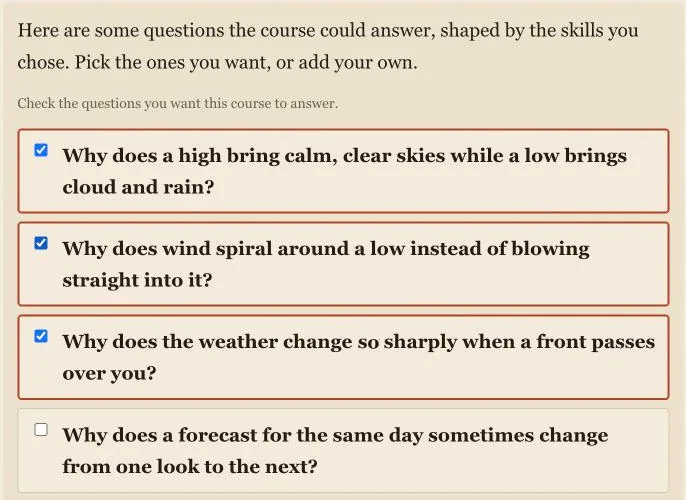
A real course from the beta, made by someone who wants to read the weather maps on the news. They chose two of the skills Herschel proposed, added one of their own, then picked the questions.
Herschel proposes the skills a practical subject could build and the questions the course could answer. Check the ones you want, write your own, or say you have no particular skills in mind.
Each lesson is written to answer your questions and practise your skills.
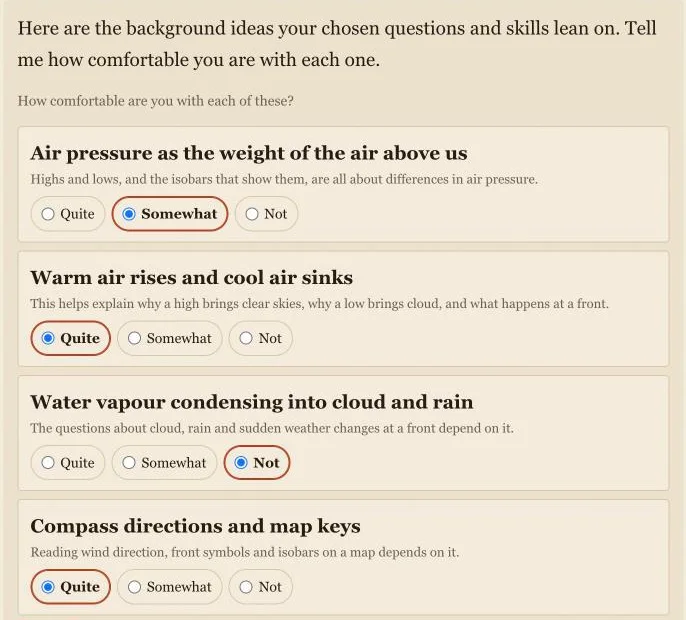
Herschel lists the background ideas your questions depend on and asks how comfortable you are with each.
What you know well is assumed. What you half remember gets a short refresher. What is new is taught properly — here, a whole first lesson on how cloud and rain form.
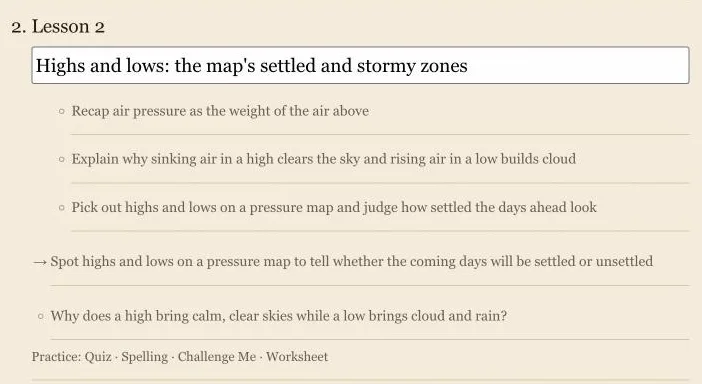
Before anything is written, you see the course: its lessons, what each sets out to do, the skill and question it takes on, and the practice that comes with it. Ask for changes, or a different number of lessons.
Write from Herschel’s knowledge, or from your own notes, PDFs, webpages and photographed pages.
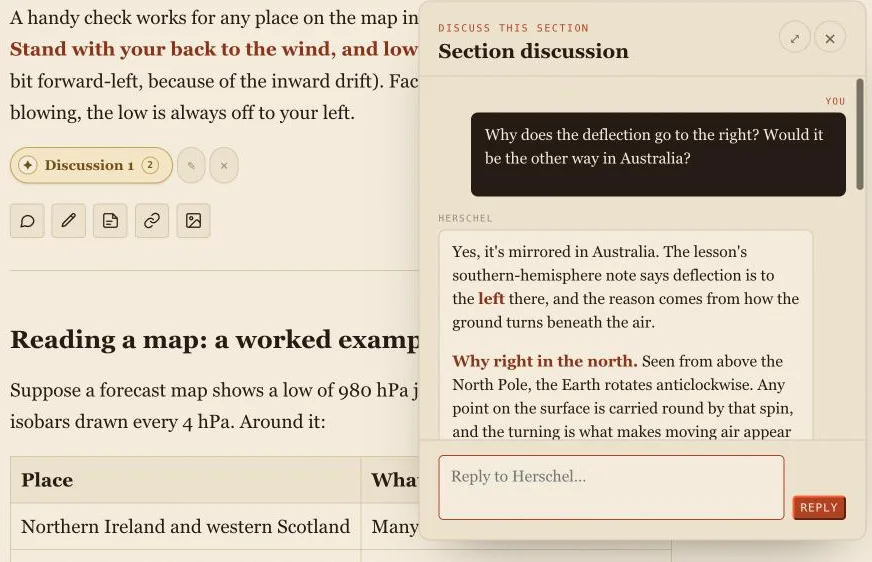
Each lesson is written for you and illustrated with diagrams Herschel draws for it. When something is unclear, ask about that section right where the question comes up.
Highlight, add notes, links and images, or correct the lesson yourself.
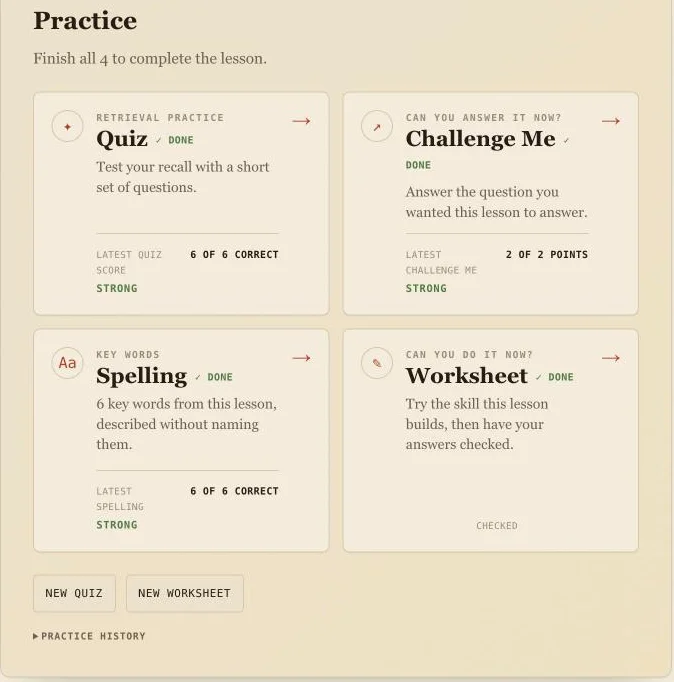
Every lesson has a quiz and spelling of its key words. Each of your questions gets a Challenge Me, and each of your skills a worksheet.
Print a worksheet and photograph your answers for Herschel to check, type them, or have someone else mark it. A lesson is complete when its practice is done.
What it’s for
Paste notes, upload a PDF, fetch a webpage, or photograph up to 100 pages of coursework. Herschel reads it first and builds the course from what you bring.
A new field, a technical idea, a decision to make. Say what you already know, skip what you don’t need, and practise what you’ll actually do.
Plan a course for someone else, print its worksheets, then photograph the answers for Herschel to check — or mark them yourself.
Start with a question you’ve always wondered about. When a course is finished, build on it: go further with a sequel, or go deeper into the same topic.
More than an answer
A chat can explain almost anything. Herschel is built for learning it — and keeping it.
Before you try it
Email Kalle to request an invitation or arrange a walkthrough. Each person gets their own account. The private beta is currently for adults aged 18 and over.
Plan and study courses, ask about any section, highlight and add notes, edit lessons, and practise with quizzes, spelling, Challenge Me and worksheets. Lessons can be written in English or Finnish. We provide a credit allowance for generation. The product is still evolving, and we welcome feedback when something is unclear or does not work.
Yes. You can paste notes, upload a PDF or text file, use a public webpage, add photos, or photograph up to 100 pages of worksheets, notes or textbook pages. The privacy policy explains how uploaded material is processed.
They belong to your account. You can export your data or delete your account. Sharing a course gives another signed-in learner a separate copy without your private notes, discussions, or progress.
Herschel uses AI and can make mistakes. Check important claims against reliable sources and correct the lesson when needed. Read the AI limitations before using it.
An invitation to explore
Try Herschel with a question of your own. Get in touch for a private-beta invitation or a personal walkthrough.
Request beta accessAlready invited? Sign in to Herschel